








A Morgantown day care, preschool, and before- and after-school care cheat sheet.

Waiting lists—special diets—licensure and accreditation—and what in the world is CCRC funding? There are so many things to think about when you’re looking for care and education for your little ones. And there’s no comprehensive list—until now. If you’re on the hunt for a place where you’ll feel good about dropping your child off in the morning and know you’ll see smiles at the end of the day, check out our day care, preschool, and before- and after-school care cheat sheet.
Morgantown has more early childhood care and education than ever before. Whether you’re looking for infant care, toddler play, preschool, or homework help for your fourth grader, you’ve got options.

Many providers have waiting lists, and some suggest getting on them up to a year in advance. But whose lists do you want to be on? We’re here to help you figure that out.
Ages 6 weeks-plus: Day care
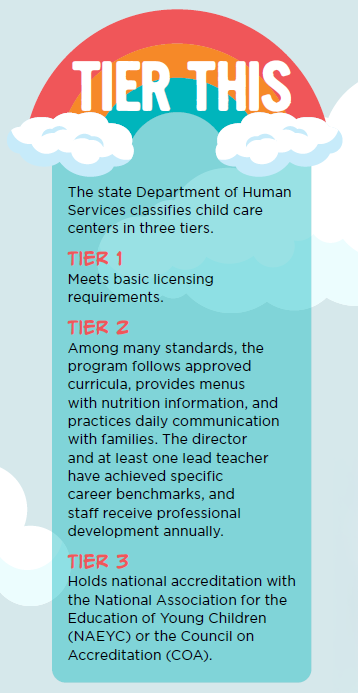
The child care landscape has changed over the past few decades, says April Milik, owner of Kinder Haus Child Care Center in Westover. Kinder Haus was the only nationally accredited day care in town for years—first accredited in 1996—and was among the first to partner with the Monongalia County school system as a public school pre-K collaborative site in the early 2000s.
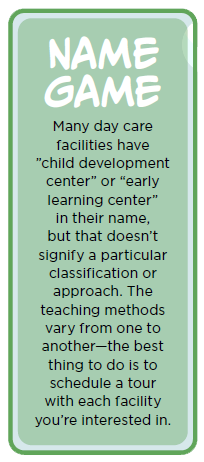
The changes have been good, Milik says. “There are definitely more day cares. And parents’ expectations have changed—they expect to have an educational component during the day-care day.” If that’s what you’re looking for, you need to ask questions, she says. “Many think that’s just a given, whereas not all day cares are like that.” Some are oriented to play time and socialization, while others follow established curricula for early childhood education.

Most day care facilities offer early drop-off and late pick-up for a small additional fee to accommodate working parents’ schedules.
Ages 3- and 4-plus: Preschool

Children can continue in day care until kindergarten. But when they reach the age of 3 or 4, new options open up. The West Virginia public education system offers Monday-through-Thursday preschool for children who turn 4 by June 30 and for 3 year olds who have special needs, and bus transportation is provided in the home school area. The same state-mandated programming provided in the schools can also be found during the 2025–26 school year at seven collaborative pre-K sites in the Morgantown area: day cares and preschools, Kinder Haus among them, that partner with Monongalia County Schools to provide that programming in the context of a care schedule geared toward working families.
Private preschool is another option. Several private schools in town are based on alternative educational philosophies and start at a young age.

West Virginia Universal Pre-K
In a public school, or at a collaborative site?

It depends on your family circumstances and your child’s temperament. Pre-K in the public school setting runs Monday through Thursday for the full school day, with Fridays and all days schools are closed off. Bus transportation is provided. If the schedule works for your family, it may be best for you.
Weigh that against preschool at one of the seven Monongalia County collaborative sites. They offer the same curriculum, typically with Friday programming and care before and after school and when the public schools are closed. That comes at some tuition cost and with no transportation, but April Milik at Kinder Haus points out some of the less tangible benefits. “They’re still little guys—those are 4 year olds you’re putting in those big schools designed and built for elementary school kids.” Also, the collaborative sites offer communication as needed, she says, as opposed to parent–teacher conferences once a semester in the schools.
Preschool and up: before- and after-school care

There are before- and after-school options for students at each of the nine Morgantown-area public elementary schools, either on-site or with bus service to and from the site of a school system partner.
Still, the deal is in the details. Some of these school-age programs have you covered for snow days, out of school environment days, and delayed openings and early dismissals—and some don’t. You may need to make secondary arrangements for those days.
The public charter school West Virginia Academy and the private schools all have their own arrangements for before- and after-school care.
The facilities we list in the pages that follow include state-licensed child care centers with capacity for 13 or more children; county school system–collaborative and private preschools; and state-licensed before- and after-school programs. You may come across other options—family care centers for smaller groups of children, innovative partial-week programs, and all kinds of summer camps. Our listings are focused on larger day care facilities and full-week school-year options for working families.
Typically, day care facilities operate year-round, but preschools and before- and after-school programs do not, so we note summer programs where they’re available at the listed facilities. These range from a few weeks to all summer long.
The village that works for you might be a few years at a day care that’s convenient to your office, then a switch to a Mon County collaborative pre-K that’s a little out of the way but has the hours you need, then a switch again to a before- and after-school program that’s close to your house. The best thing to do is get clear about what’s important to you well in advance of your need, decide which locations work for your circumstances, then tour the facilities. They are all happy to provide tours and answer your questions.
Child Care can Be Affordable

Working and student families earning up to 150% of the federal poverty level can apply for tuition subsidies administered by the Child Care Resource Center (CCRC) of Catholic Charities West Virginia. Most child care providers in town accept CCRC funding. ccrcwv.org/families
Tour and Ask!
Reputable child care facilities communicate openly and are happy to answer questions. Here are some basics:

On the web page or on the phone, learn about
- Hours of operation
- Tuition, financial assistance, discounts
- Waiting list
- Meals
- Handling of sick children and emergencies
If it looks good, schedule a tour with your child to ask and observe
- Qualifications of director and teachers
- Communication with parents
- Ratio of teachers to children
- How challenging behavior is handled
- How the facility is cleaned and sanitized
- Parent handbook
- LOOK FOR …
Positive teacher–child and child–child interactions, attentive supervision.
Holding infants while they’re fed, prompt response to crying.
Indoors: books, blocks, puzzles, art supplies, musical instruments, puppets.
Outdoors: shade, well-kept play equipment, teacher engagement.
After your visit
Trust your gut
Did the facility give you a good feeling?
Ask your child
Would you like to play there?
Families may want more detail about food allergies, potty training, visitation policies, and more. Good lists of questions are easy to find online.
Before- and After-School Care for Elementary-Age Students
If your child is enrolled in a private school, the school typically provides before- and after-school options. That’s true for the public charter school West Virginia Academy, too.
But if your child is enrolled in any of the other nine Morgantown-area public elementary schools and you need care before, after, or both, you need to make other arrangements. There are private-partner options for all of them—some offered on school property, and some with bus transportation from and to another site.

Each school-age program offers its own take on homework, snacks, and play. Kidematics, for example, offered on-site at Cheat Lake and Suncrest elementary schools, is centered on physical activity and social skills. Its 40-week curriculum aims to get kids over the recommended number of minutes of daily physical activity and to help them learn to build relationships and get along with others as they play.
The Source, a Westover program for students at Skyview Elementary, wants children to be supported while enjoying a sense of freedom. “It’s free play, but it’s organized free play,” says The Source founder Kevin Cain. “We have very trained staff who allow the kids boundaried freedom—it’s safety, it’s direction, it’s kindness to the people that we’re with—and, at the same time, we allow them to be kids.” Snacks and homework help are on the agenda. “And we want to create community—strong men and strong women teaching children to be strong men and strong women.”
Be aware that it’s not just regular school days that you need to consider. Each of the school-age care programs covers its own mix of school closures: holidays, planned closures when teachers do planning, and unplanned closures for weather. The programs that are offered on-site at the schools are typically closed when schools are closed. The ones that take place at day cares and preschools generally offer care during school closures. Pro tip: If you’re looking for care during closures beyond the ones your program covers, check with the early childhood facilities that have before- and after-school programs—many of them accept students from schools other than the ones they have partnerships with on days when schools are closed.
The bottom line is, there are quality child care resources in all parts of town. With a little thoughtful advance planning, you’ll be able to get the care your family needs.
READ MORE STORIES FROM OUR FALL 2025 ISSUE

Leave a Reply