








Find out how a drone helps Lassie come home.
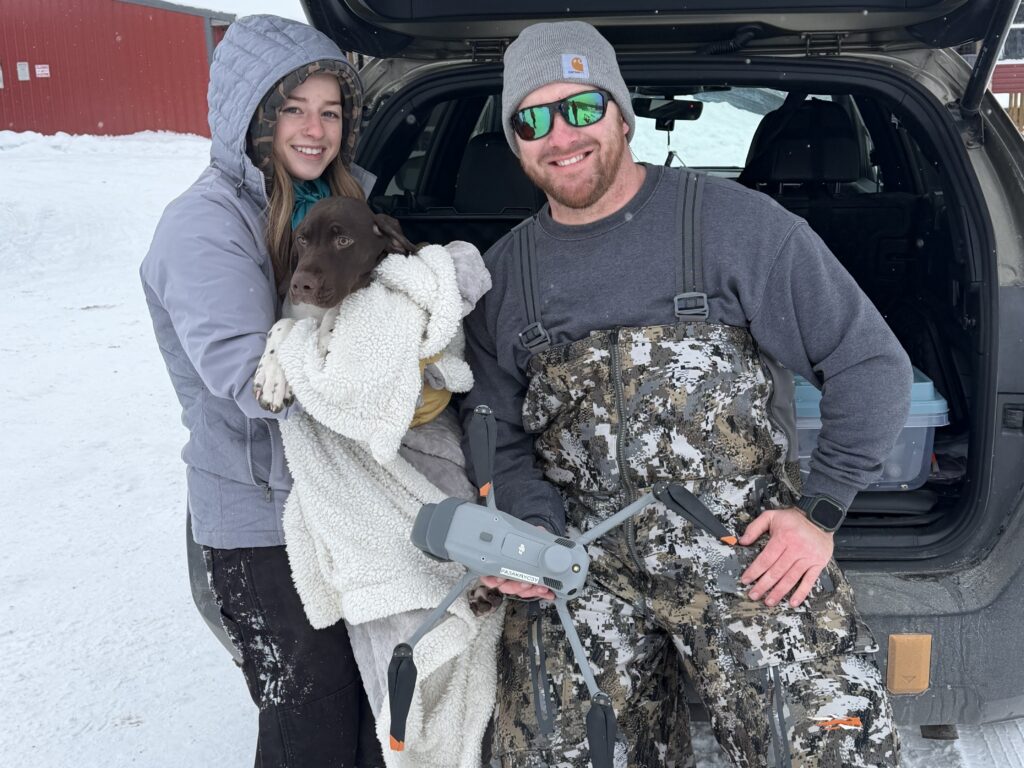
You know that moment at the end of Homeward Bound: The Incredible Journey when it has us convinced Shadow wasn’t going to make it home, but then he comes limping over that hill, and Peter runs over and gives him a big hug, and we’re all ugly-crying, and we have to go hug our beloved furry friends to feel better? Well, Josh Poling has played a role in about a dozen such reunifications in the past year, and he says it never gets less rewarding—or less emotional.
Poling didn’t plan to lead rescue missions for lost pets, but he found himself in a unique position: recently retired from the U.S. Army, a public affairs officer for the U.S. Forest Service, and a hunter familiar with Appalachian terrain. Combine all of that outdoor experience and specialized training with an interest in aerial drone photography, and you’ve got the perfect conditions for Poling to start Mountain Sky Drones last March.

The state-of-the-art drone provides Poling with a birds-eye view with thermal and infrared imaging of a landscape. He bought it for wild game recovery—and he still does that, plus real estate photography, agricultural spraying and seeding, security operations, and more—but its potential for recovering other animals was undeniable.
The opportunity to test that theory arose when Bailey, a blind, 9-year-old labrador retriever from Braxton County, ran away from home.
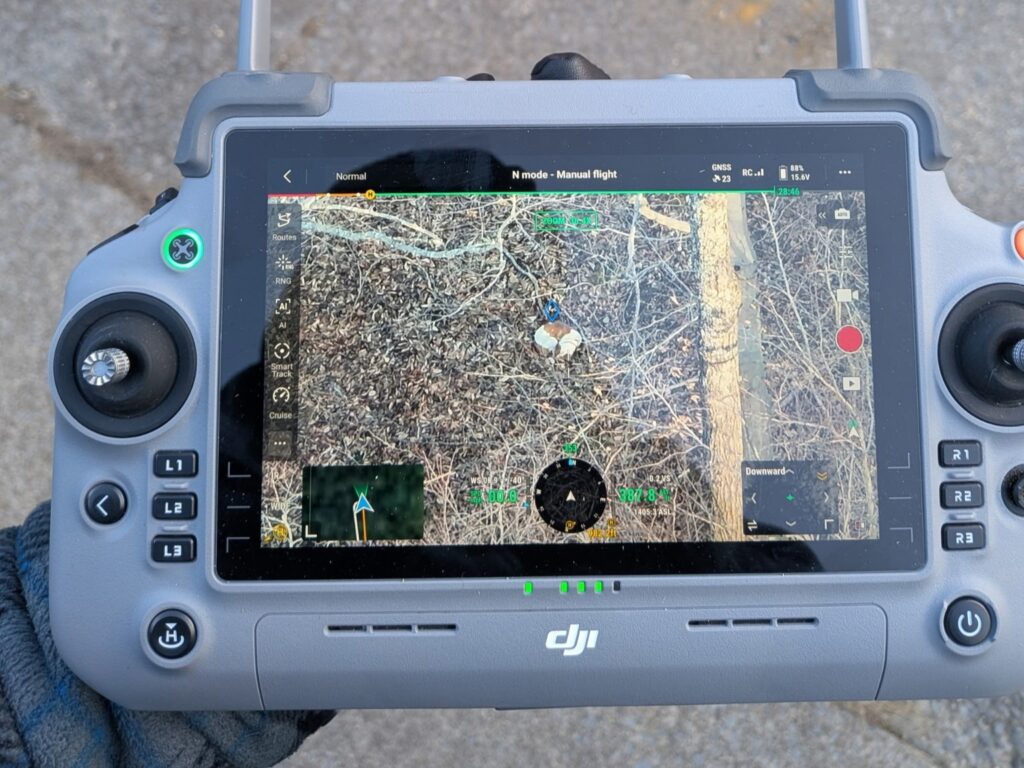
The odds were against Poling—Bailey had already been missing for four days before his involvement, summertime heat and leafy foliage made it challenging to spot heat signatures, and the terrain was steep. But Poling had a drone with a loudspeaker and a plan.

After recording Bailey’s owner calling for her lost pup, Poling projected the audio from the drone while it hovered in a field, rotating it regularly to cover each direction the dog could be listening from. His hypothesis was that Bailey, due to his blindness, would rely more on his hearing. That proved correct when the pooch came running in search of his owner, and Poling was able to reunite the pair.
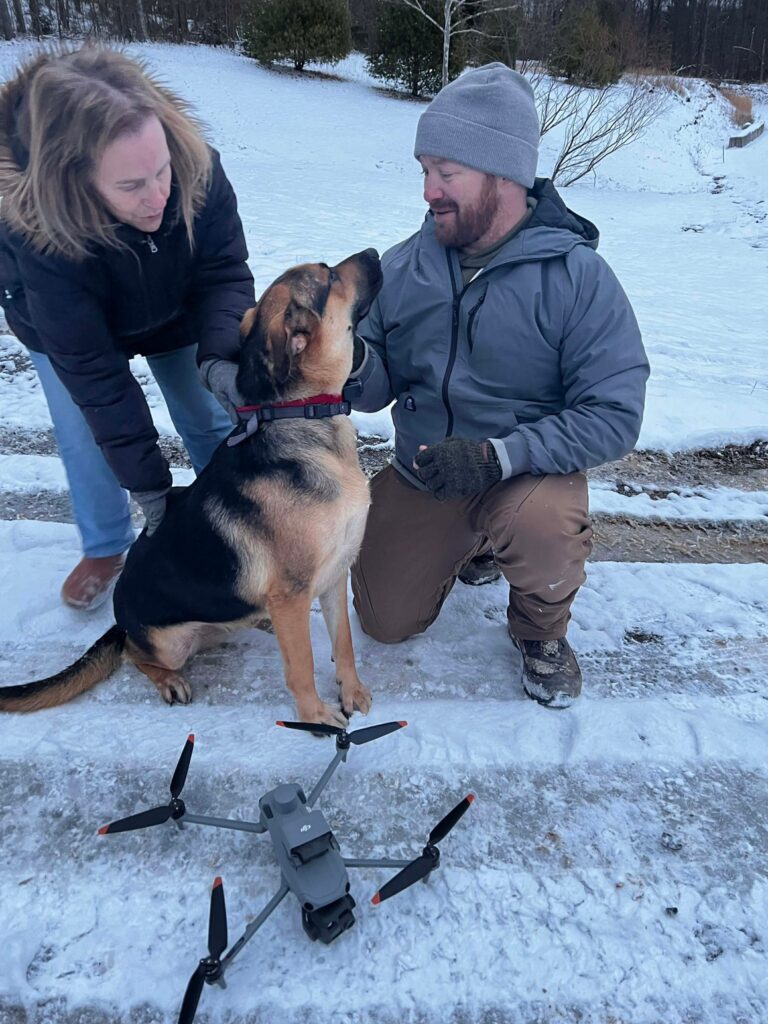
Since then, Poling has helped bring more than a dozen lost pets back home.
“I have a 12-year-old lab, and I’ve lost him before when we were out hunting. I know the panic that can ensue, and the fear of losing what many consider a family member,” he says. “I take it to heart, and I put every effort I can to find a dog as if it’s my own.”

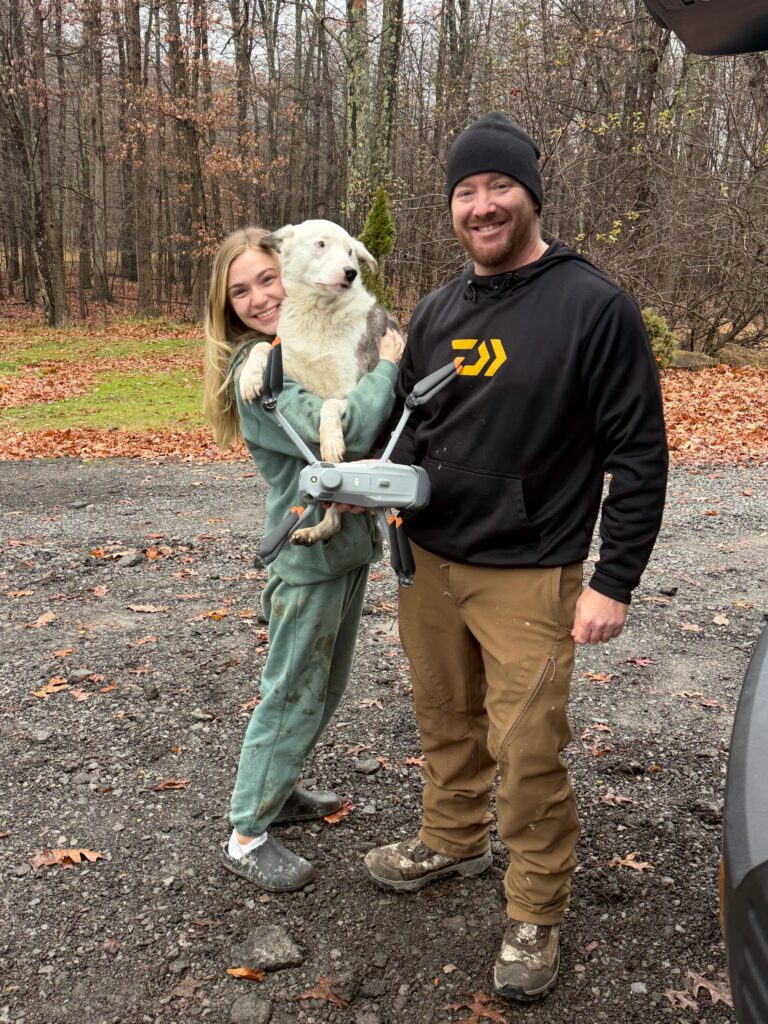
The process can be complicated, but Poling is nothing if not adaptable.
- He gets the call about a lost pet. If the pet has been missing for more than 24 hours, then it could have covered more ground than a drone can reasonably search, and Poling might suggest alternative next steps—though he has located pets lost for several days.
- He assesses the pet’s last known location and the timeframe when it went missing, using that information to triangulate an area that would be the most sensible to search.
- He asks about the dog. Has it run away before? If so, where did you find it? Does it chase wildlife? Does it bark?
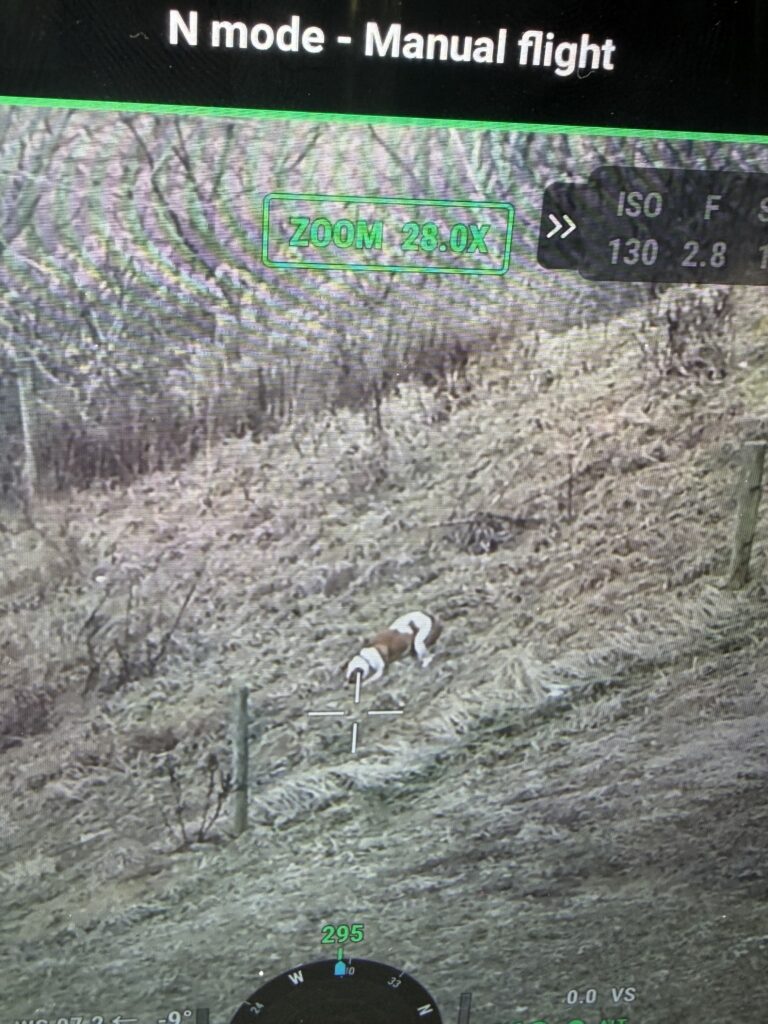
- He gets the bird in the air. Using landscape features commonly used by animals for navigation, like roads and ridgelines, he’ll fly the drone in a half-mile radius, searching for signs of life.
- Once he locates the dog, he drops a GPS pinpoint and shares it with the owner to open with Google Maps, and the owner retrieves their pup. If the pooch is on the move, he communicates with the owner to stage an interception.
- Finally, the runaway-no-longer gets lots of hugs, and many happy tears are shed.
Poling operates in the Morgantown area but has led rescue missions across the state. Follow his Facebook page to warm your heart with every rescue, or on the off chance you need his services one day. If that day does come, he suggests preparing for around $300 total—$100 to dispatch, and an additional $100 for every hour on-site.
READ MORE ARTICLES FROM MORGANTOWN LOWDOWN
Leave a Reply