








As the city heads into its first winter with the camping ban, Morgantown confronts the question of where people will go next.

Clarksburg, Parkersburg, Princeton, Wheeling, and, as of earlier this year, Morgantown—these are just a few of the West Virginia cities that have passed controversial “camping ban” ordinances in recent years. For Morgantown, that’s Article 1157 of the City Code, titled Camping on Public Property. Since the ordinance quietly took effect on May 29, 2025, violations have mounted—and so has pressure on social service groups. With winter poised to sink its icy claws into Morgantown’s streets, the camping ban seems here to stay. So, what happens now?
A Divided Community
First, some context. Camping on Public Property, introduced by Third Ward Council Member Louise Michael last year, prohibits camping and storing personal belongings on public property. Penalties range from written warnings to hundreds of dollars in fines to up to 30 days’ imprisonment—making Morgantown’s ordinance one of the few in the state to dole out jail time as punishment. However, no citations or penalties can be issued without a refused offer of alternative housing.

The ordinance aims to increase public safety, addressing the presence of people who store their belongings and sleep in downtown doorways and beside trails—places where residents want to be able to conduct business and socialize comfortably.
Since its introduction, the camping ban has been the subject of much debate. Mutual aid organization Morgantown Coalition for Housing Action submitted more than 3,000 signatures demanding a repeal. Council rejected the repeal 4–3, leaving the decision in the hands of voters in the April 2025 municipal election. 1,900 ballots later, the ordinance remained in place.
This isn’t just a West Virginia movement—similar bans have been implemented across the country since a 2024 U.S. Supreme Court decision. It overturned lower court rulings that previously deemed camping bans unconstitutionally cruel and unusual punishment under the Eighth Amendment.
The Cold Reality
As of mid-October, 19 first-offense warnings and five second-offense citations had been issued under Morgantown’s camping ban. No third-offense arrests had been made.
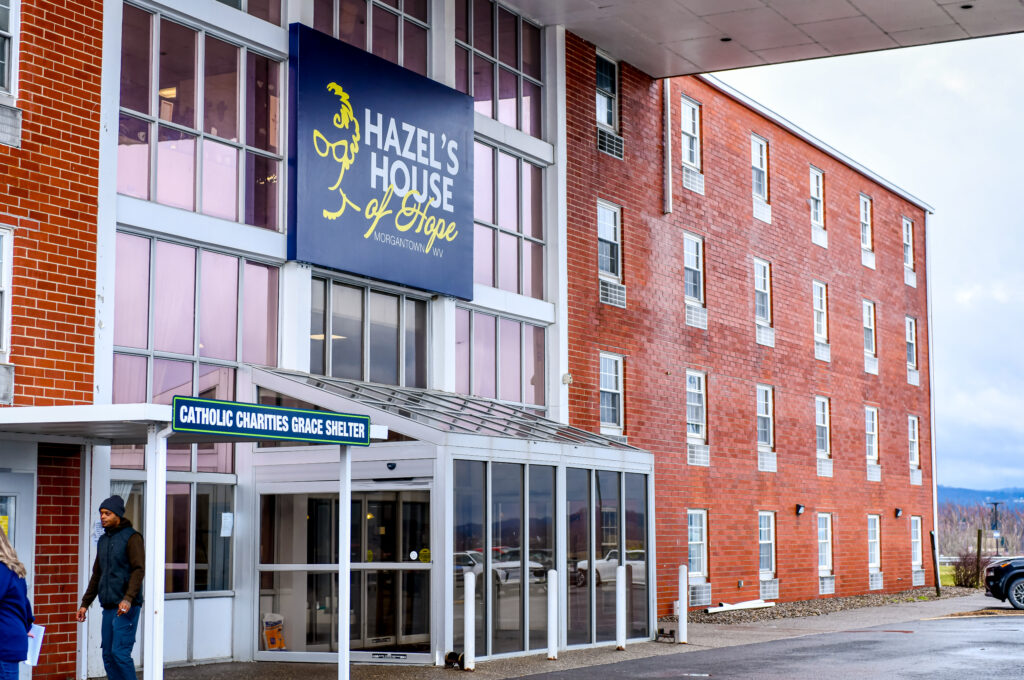
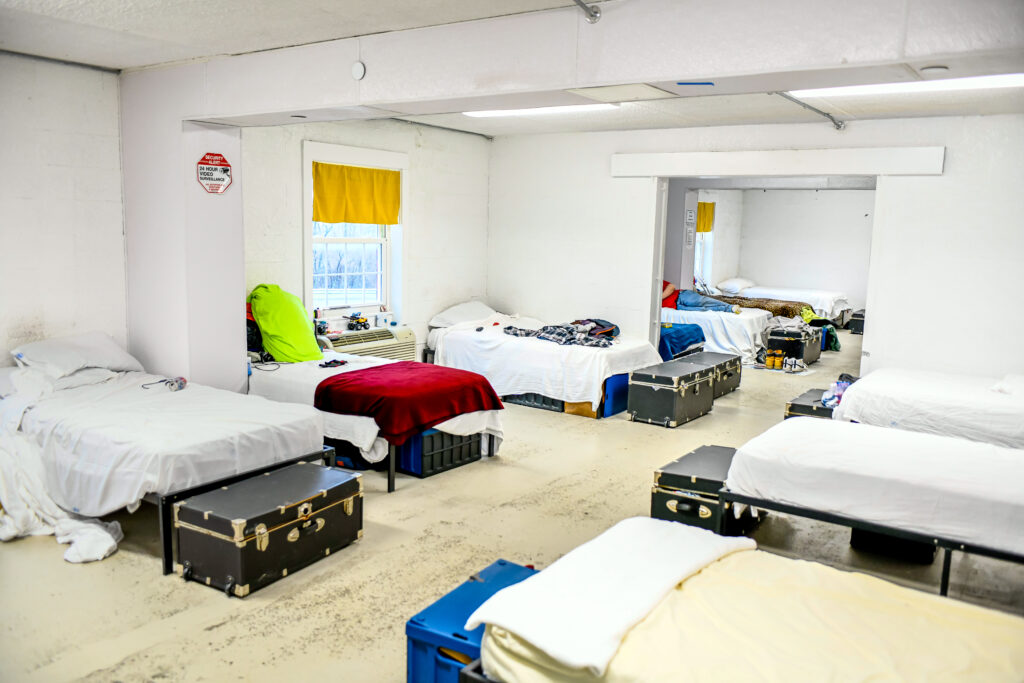
This doesn’t necessarily reflect the number of individuals sleeping outside, as citations are not issued if alternative shelter is unavailable. At the time of the January 2025 annual Point in Time count, Monongalia County was home to around 120 unhoused individuals. Compare that with the number of beds in Morgantown’s two emergency shelters: Grace Shelter at Hazel’s House of Hope, operated by Catholic Charities West Virginia (CCWVa), with 19 beds, and The Rainbow House, operated by Project Rainbow, with 22 beds.
“Police are in a tough situation, where it’s difficult for them to give an alternative shelter location because the shelters are full,” says Deputy Mayor Brian Butcher. “We’ve heard multiple reports from people who have lived in Morgantown their entire lives being offered shelter at Union Rescue Mission in Fairmont, which operates as a first-come, first-served night shelter only.”
Grace Shelter aims to add more beds, but it will be costly and time-consuming—and winter won’t wait for funding. For now, resources are being leveraged for this year’s warming shelter, an emergency shelter that’s open during the winter months. As of late October, the plan is for the shelter to be housed at the Nitor Suites facility on West Run Road, operated by CCWVa and the West Virginia Coalition to End Homelessness.
Beyond Shelter Beds
Many identify the lack of affordable housing as a root of the problem, and the housing market does play an important role. Butcher poses a few solutions: upzoning, inclusionary zoning, prioritizing mixed use development, public housing, and community land banks.
But it’s also more complicated than that, according to Butcher. “Unfortunately, a lot of our shelters and programs are set up to fight a losing battle,” he says, referencing systemic issues like income inequality and rising housing costs. “If our programs stay full, that’s a good sign—that means people are consistently accessing services and want to be there. But we should also be looking at how people are moved into temporary and permanent supportive housing.”
If any city in West Virginia can test a different approach, it’s Morgantown, says CCWVa CEO Mark Phillips. “It’s incumbent upon a city like Morgantown—that has more resources than other smaller communities in the state, large employers, and support from a university like West Virginia University—to think, ‘How can we leverage the resources that we have for some of the most pressing social issues of our day?’”
As winter reaches its peak in February, the West Virginia Legislature will begin its annual session. During the 2024 session, Del. Geno Chiarelli of Mon County introduced a statewide camping ban, which passed the House but died after referral to a Senate committee. Phillips expects the bill to be reintroduced in the upcoming session. If passed, it would implement a camping ban much like Morgantown’s on a statewide scale—including regions where shelters are extremely few and far between.
“It’s like putting your finger in a dam—water is going to come out somewhere else,” says Phillips. “While I recognize that cities are trying to make decisions that are in the best interests of their residents, they’re not creating solutions for homelessness. They’re just making homelessness less visible in their communities.”
Morgantown’s camping ban might keep tents out of sight, but it doesn’t address the reasons people end up there. Real progress will depend on how the city chooses to use its tools—not just to enforce, but to build something better.
To support the nonprofit organizations that are holding the shelter safety net together, visit ccwva.org, “Morgantown Coalition for Housing Action” on FB, and wvceh.org. To help elected representatives reflect their constituents’ desires, voice your opinion—find contact information for council members at morgantownwv.gov and state officials at wvlegislature.gov.
READ MORE STORIES FROM OUR WINTER 2025 ISSUE

Leave a Reply