








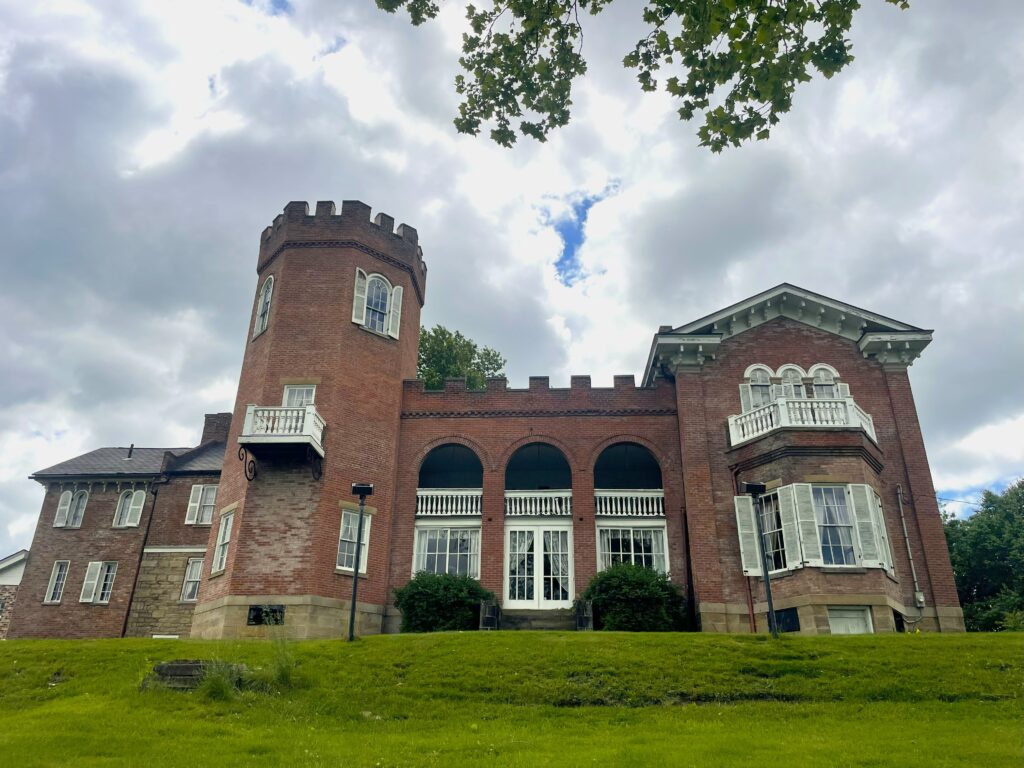
The third-oldest castle in the United States, Nemacolin Castle in Brownsville, Pennsylvania, gives a glimpse into centuries gone by.
written and photographed by Kaylyn Christopher
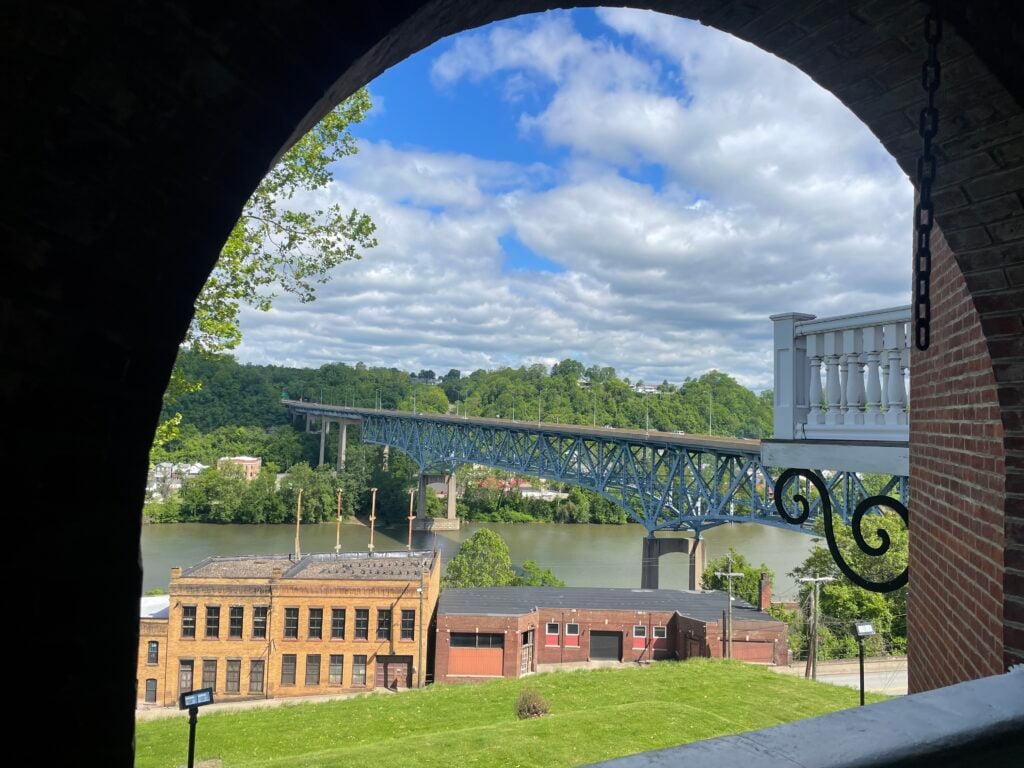
Just 45 minutes from Morgantown in Fayette County, Pennsylvania, stands a stately hilltop mansion overlooking the Monongahela River. Distinguished by its crenellated octagonal tower, what is now known as Nemacolin Castle serves as a time capsule of the evolving lifestyles of three generations of the Bowman family: the castle’s original and only owners, who lived in the home from the late 1700s through the mid-1900s.
The property, a National Historic Landmark, began as a modest trading post built by Jacob Bowman, who traveled west over the Allegheny Mountains from Hagerstown, Maryland, to Brownsville, Pennsylvania, to set up shop. Over the years, the trading post was expanded to create a stone house and, eventually, Bowman Castle, featuring 22 rooms and 70-foot-long hallways. Brownsville was the western end of Nemacolin’s Trail and, in honor of his friend and Native American leader, Chief Nemacolin, Jacob Bowman renamed it Nemacolin Castle. “Chief Nemacolin blazed the trail over the mountains for others to be able to come this far,” says Brownsville Historical Society spokesperson Kim Brashear.

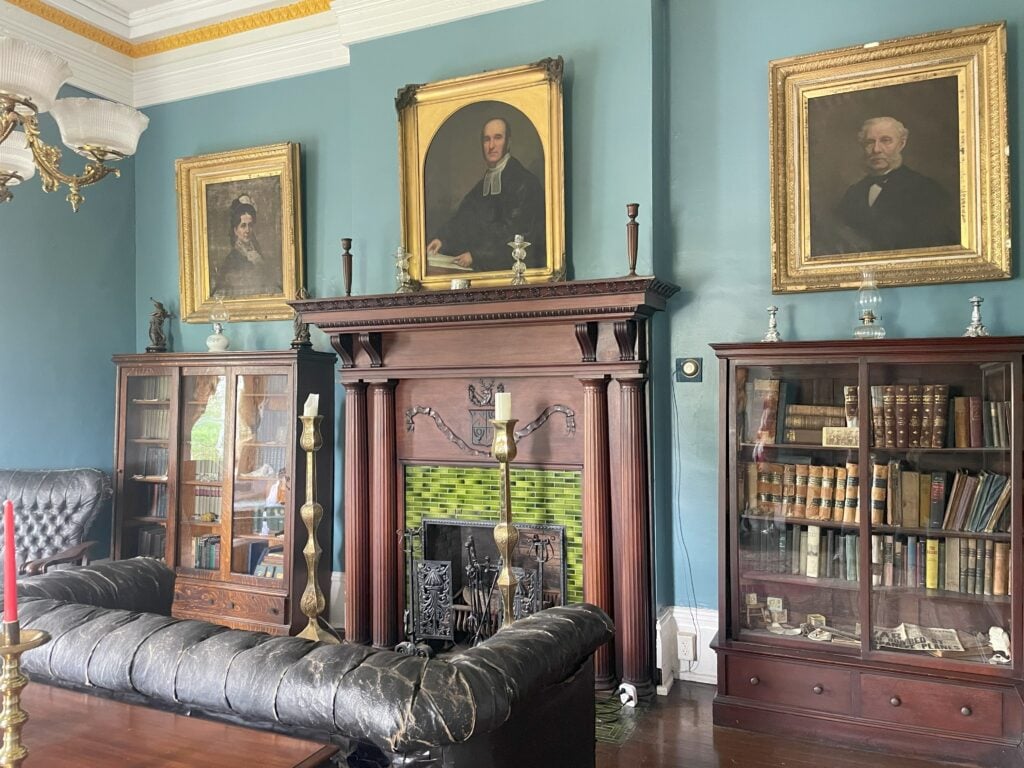
At 235 years old, Nemacolin Castle is said to be the third-oldest castle in the United States. At the request of Leila Bowman, the last of three Mrs. Bowmans to live in the castle, the property was turned into a museum, and it’s maintained and operated today by a dedicated group of volunteers from the Brownsville Historical Society. While its exquisite exterior, defined by brick and stone accents, catches the eyes of passersby, it’s the thoughtfully preserved interior that keeps visitors coming back. From primitive hand-hewn beams and a Franklin stove—invented by Benjamin Franklin in the 1700s—to more refined touches that reflect the owners’ travels, such as a pink Italian marble sink and art pieces from Venice, the castle’s relics truly showcase the Bowman family’s journey through time and wealth.
“The last Mrs. Bowman was proud of her family’s accomplishments,” says Brashear. “Most of the items in the castle are from the Bowman era.”
Inside the castle, tables are still set with pewter dinnerware, while delicate gowns hang in the women’s bedrooms. The castle’s first floor displays a desk that was given to Jacob Bowman by then-President George Washington, who appointed Bowman to serve as Brownsville’s postmaster.
Group tours are offered throughout the year, and there is an on-site gift shop with keepsakes and souvenirs. The property is available as a wedding venue that can accommodate both indoor and outdoor ceremonies, and the castle welcomes
guests for events including a Victorian tea in the spring and a local wine tasting in the fall. A fall visit may include a glimpse of the grounds’ ginkgo trees—gifts from a former emperor of Japan—in peak color. The leaves of the male tree, says Brashear, turn “Steeler gold.”
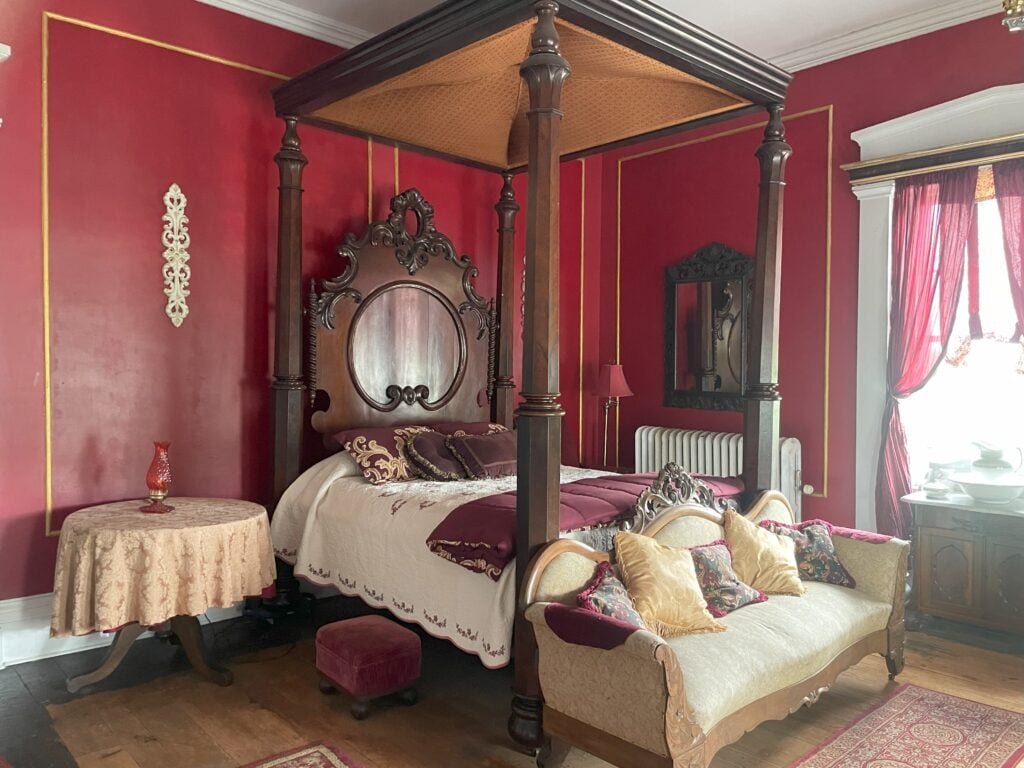
Each October, the castle hosts ghost tours; Brashear is quick to clarify, though, that the castle isn’t haunted—it’s “spirited.” That’s why, when visitors to the Laurel Highlands region of southwestern Pennsylvania inquire about booking accommodations at the castle, she explains that each of the bedrooms is already occupied. “We don’t rent our rooms,” she says. “Because they’re always full with our spirits.”
Front Street, Brownsville, Pennsylvania, @brownsvillehistoricalsociety on FB
READ MORE STORIES FROM OUR FALL 2025 ISSUE
Leave a Reply