








What if the criminal justice system were run by teenagers?
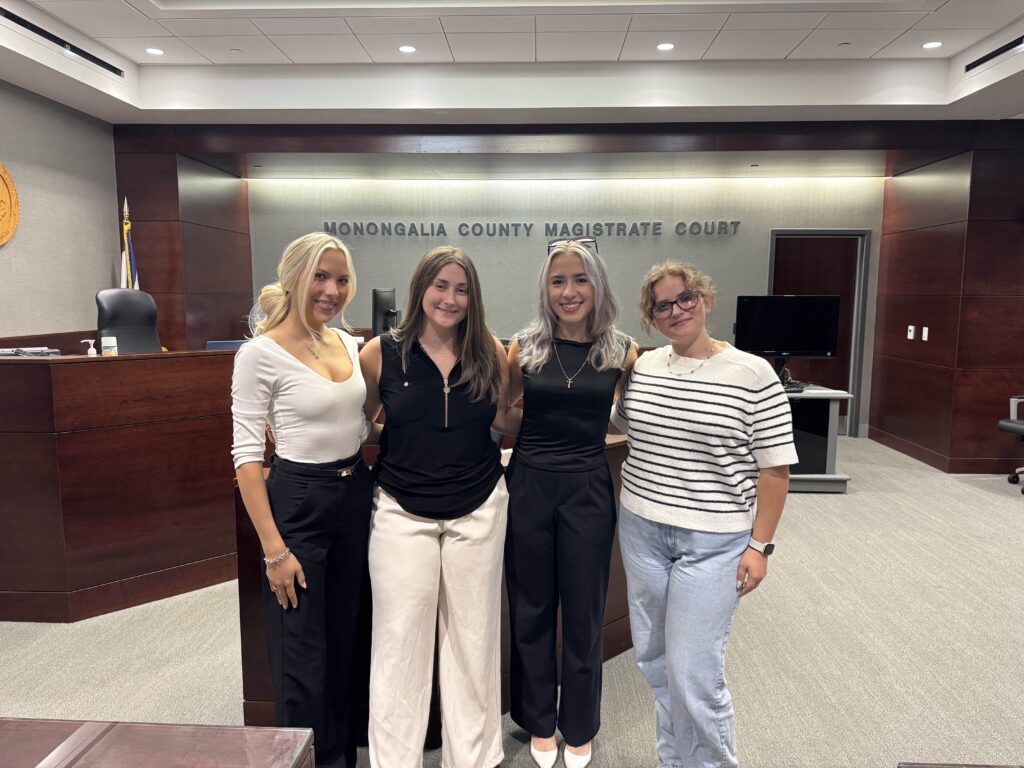
A history of defiant behaviors, academic struggles, and proximity to drug users all came to a head when a Monongalia County 12-year-old was caught vaping at school and cited for underage possession of tobacco. Less than a year later, that same student boasts a report card of mostly As and Bs—a 40% improvement in his learning—and is excited to start high school, where he hopes to study music.
How does such a success story unfold? In this case, it was with help from Monongalia County Teen Court.
Since 2018, under the West Virginia Teen Court Association, Monongalia County Teen Court has offered local youth the chance to take control of their futures. First-time, nonviolent offenders ages 11 to 17 accused of minor crimes are referred by schools, police, or juvenile justice authorities. These defendants agree to an unconventional hearing—one run entirely by their peers.
An adult judge overseeing a courtroom of teen attorneys, jurors, bailiffs, and clerks might sound like The Twilight Zone meets Law & Order, but these fun-sized lawyers learned from the best. Volunteers complete training sessions and receive mentorship from local legal professionals before taking charge of the courtroom. The program is especially popular with aspiring lawyers, social workers, and law enforcement officers—but even those with other interests gain valuable experience.
“It’s a great opportunity to learn about the criminal justice system, give back to their community, gain confidence and leadership skills, and be part of something where their voice matters,” says Monongalia County Teen Court coordinator Alexyss Coles. “It can contribute to community service hours and be put on resumes—we’ve toured West Virginia University’s College of Law, and I’ve written letters of recommendation for participants.”
After opening statements, testimony, and deliberation, the jury delivers a verdict. Whether it’s community service, remedial classes, apology letters, or jury duty, consequences are designed to be constructive. Upon successful completion, charges are dismissed and records remain clear.
In recent years, about 40 defendants have participated each year, supported by 60 youth volunteers and local legal students and professionals—including WVU political science student Hannah Olszewski, mentor to the 12-year-old defendant.“ His story shows that teen court can be a lifeline for individuals who need someone to believe in them,” Olszewski says. “With the support of the program and a second chance, they can truly turn things around.”
READ MORE STORIES FROM OUR WINTER 2025 ISSUE

Leave a Reply