













Mountain Line works with social service agencies to address transportation costs.

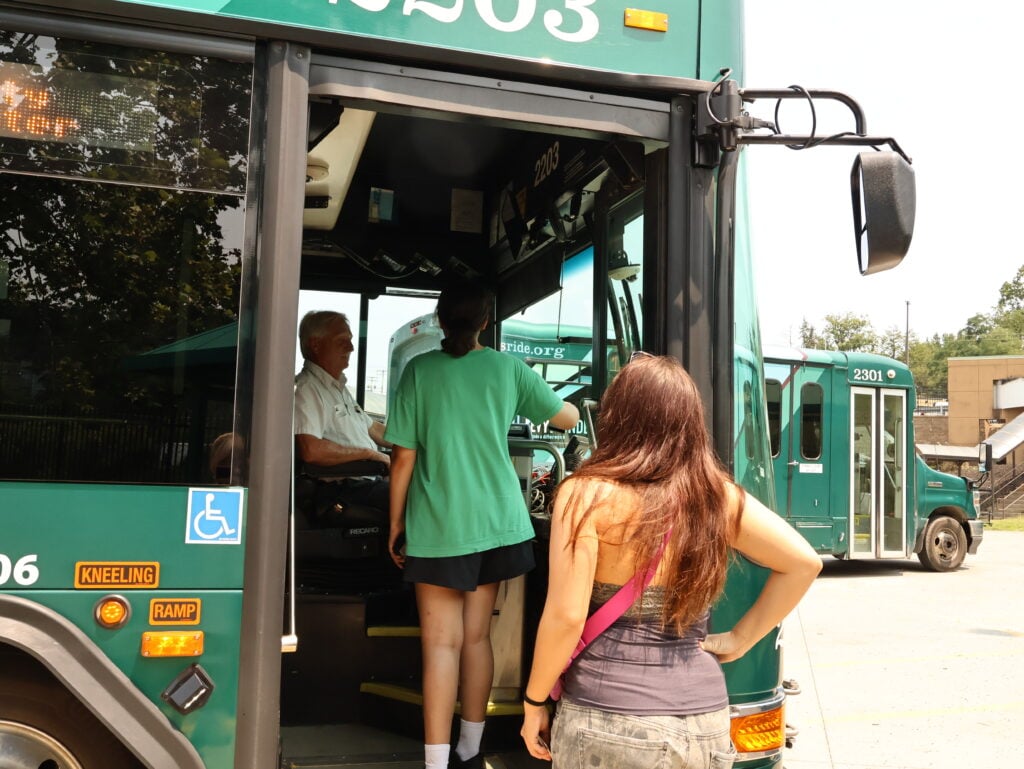
When Hazel’s House of Hope was first proposed in the late 2010s, it was envisioned as a central location at the former Ramada Inn south of town for social services: ones that addressed needs like shelter, health care, food, and more.
Many of those services were located downtown at the time, so it raised the question: How would people in need access them all the way out on Scott Avenue?


Some community partners—the City of Morgantown, the Monongalia County Commission, Morgantown Community Resources, and Mountain Line Transit Authority—set to work coming up with an answer.
Hazel’s House opened in 2021, and its campus now serves as home to:
- Aspire long-term addiction recovery program focusing on veterans;
- Catholic Charities Grace Shelter;
- Lauren’s Wish addiction triage center;
- the Milan Puskar Health Right free clinic;
- Salvation Army, serving lunch and dinner every day and providing other services;
- United Way of Monongalia and Preston Counties’ Helpful Harvest program, distributing food to food pantries and more;
- Wellspring Family Services’ behavioral health program;
- And others.
The transportation solution has been a work in progress. We spoke with Grace Shelter director Mindy Thorne, Hazel’s House of Hope director Jessica Thompson, and MLTA CEO Maria Smith to learn how they’re getting clients to the site.


Back in 2021, they extended service hours on the existing Route 50, also known as Don Knotts, to Scott Avenue and made it daily. From September 2022 through December 2024, it was free to riders using shifting combinations of city, county, nonprofit, and grant funding.
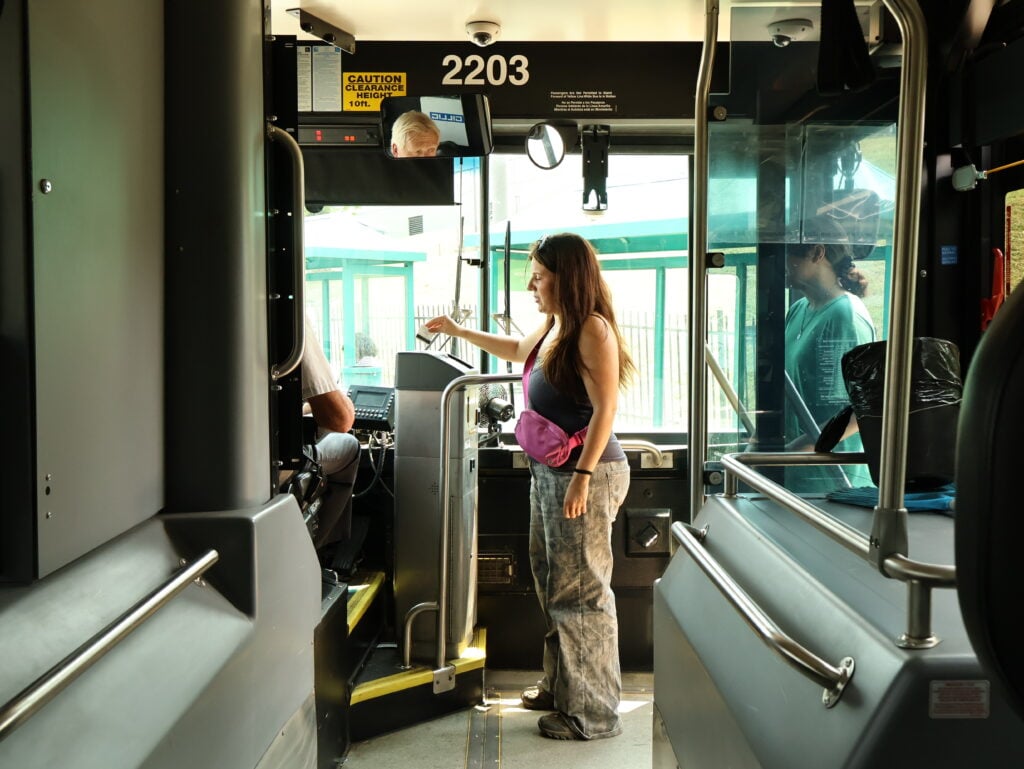
In the first year, subsidizing the route cost $25,000 a year—but by December 2024, the cost was projected to be more like $65,000 a year.
That was due largely to the fact that many of the riders could have been covered by other programs, says MLTA’s Smith. A WVU student boarding Route 50, for example, had no reason to swipe their student ID, because the route was free. The university could have covered that student’s ride, but instead it was covered by organizations investing in the free route program. Riders who work or live in Morgantown could have been covered by the Property Tax Bus Pass Program. And those in current or past military service and their immediate families could have been covered by Operation Welcome Home.

$65,000 wasn’t sustainable for the organizations involved—so, in late 2024, they took a collective step back and asked, “How much would it cost if we covered the cost of only the social service agency clients’ rides—not just on Route 50 but on any local route—for one year?”
And that’s how the Social Service Transportation Bridge Funding Pilot Program started in December 2024.

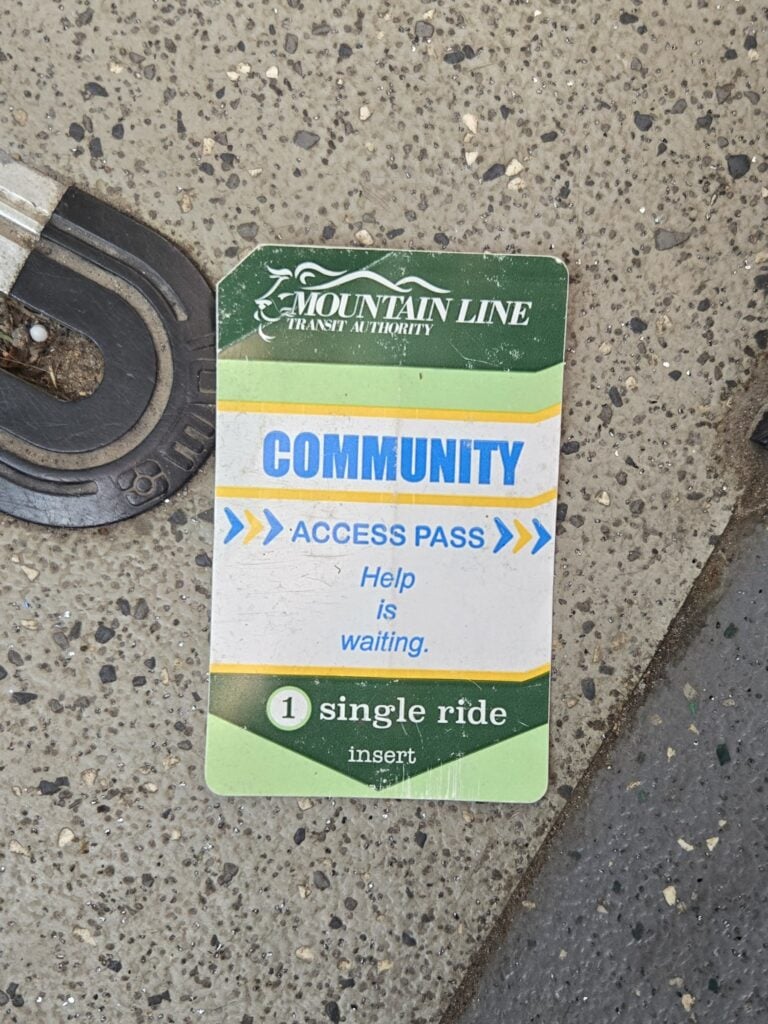
The Monongalia County Commission provided MLTA with increments of $5,000 over the course of 18 months. Eleven participating social service agencies ordered 1-ride and 15-ride bus passes from MLTA, drawing on that pool of funds. The agencies distributed those passes directly to their clientele—the majority of whom rely on public transportation, according to Thorne.
And, importantly, in order to receive passes, the agencies were required to provide information they collected from riders about destination, trip purpose, and more.
“This data would help us in the end to know for sure if we’re helping people get to social services and jobs,” says MLTA’s Smith.
The data showed:
- After 17 months, 79% of the passes had been scanned—a number the agencies were happy with, given that some passes were still out there and had not yet been distributed to clients.
- Provided passes were used mainly for food, temporary shelter, and medical purposes—exactly what they were meant for.
- The top destinations were Hazel’s House of Hope, Milan Puskar Health Right, and Valley Health—again, exactly as intended.
Under the pilot system, Route 50 ridership was offset by other payment methods, like the Property Tax Bus Pass Program—so the cost wasn’t $65,000 like the free route had been.
By the time the 18-month pilot program ended on June 30, 2026, MLTA had a lot of data to tie in a neat bow and hand back to the social service agencies. It showed that the dozen or so participating agencies should collectively budget around $27,000 for transportation. The shares of most of the organizations come to under $4,000.
As a data-collection endeavor, the pilot program was a success.
“The idea was to give us all a pause and allow time to figure out the real cost for their clients,” says Smith. “Now we can go to them and say, ‘It’s not $65,000. Here’s what you actually spent on your clients during this past year.’ So it’s a little more realistic.”
Unfortunately, the agencies face a tightening funding environment in recent years. But now they’ve got priceless data and a foundation of collaboration, so they’re doing what Morgantown’s social service agencies always do when things get tough: working together and problem solving.
“We will continue to try and fill the gap as much as we can, but we are a nonprofit and limited, so we have to be cautious about our funding and moving things around,” says Thorne.
Thompson says Hazel’s House has applied for several grants and successfully found a private donor who funded $10,000. These funds will be distributed among all agencies on the Hazel’s House campus.
So if you see increased fundraising efforts in the coming months, this might be why—and your support could help someone catch the bus to work, school, or a doctor’s appointment and take one step closer to independence.
Learn more about the results of the Social Service Transportation Bridge Funding Pilot Program here. Find out how you can support the Hazel’s House campus here.
READ MORE ARTICLES FROM MORGANTOWN LOWDOWN