













Celebrate 250 on grounds that contributed to America’s independence.

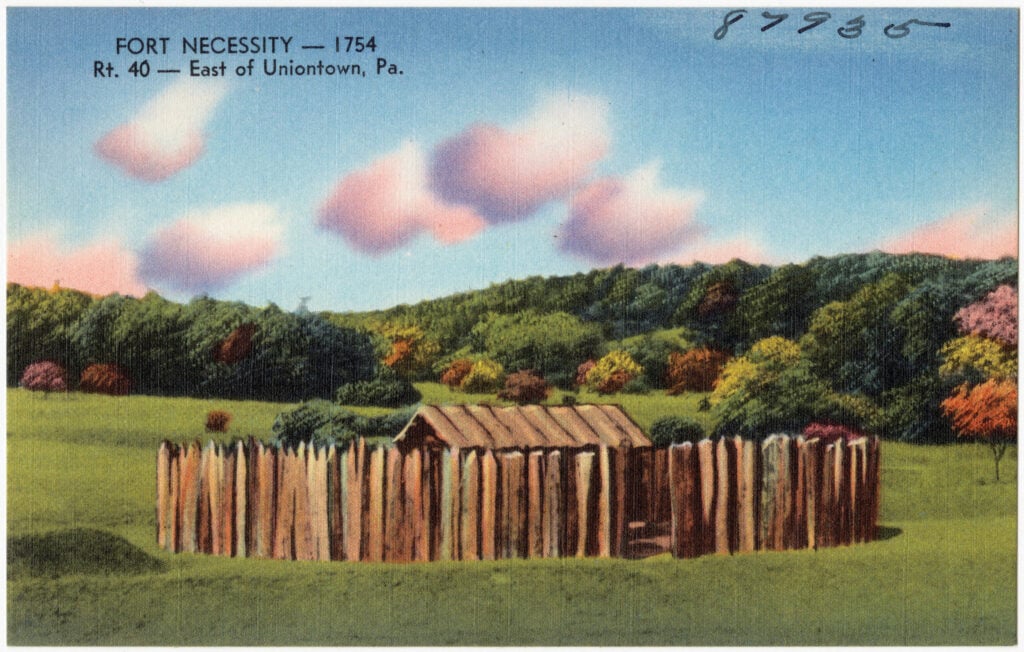
Only a short drive from Morgantown, you can step back in time at not one, but two colonial war sites. Forts Necessity and Ligonier once supported British soldiers in the 1754–1763 French and Indian War—and they helped set the stage for the Revolutionary War that followed soon after.
As America celebrates its 250th anniversary this summer, visitors can walk the grounds where George Washington and his fellow soldiers once fought, forging America’s future. While the French and Indian War was not directly part of the Revolution, it played a critical role in the nation achieving its independence. Young Washington gained his footing during the French and Indian War. His experience leading his first battle, at Fort Necessity, would help him advance through the rest of his career. That battle and many others earned Washington the title of commander-in-chief in the Revolutionary War and equipped him to play a key role in America’s fight towards freedom.


Land was the name of the game in the French and Indian War, as both the French and British were fighting to expand their claims in North America. The battle at Fort Necessity—one of the first battles of the war—erupted on July 3, 1754, when both sides believed they held the rights to the Ohio Valley. A fight broke out, and Washington’s troops, outnumbered and surrounded by French soldiers and their Native allies, were forced to surrender. Visitors today can walk the reconstructed fort in the Great Meadows and visit the on-site museum that recounts key moments and figures in the event.
Unlike Fort Necessity, Fort Ligonier was never meant to be a battleground. The British constructed the fort as a supply depot. But a chaotic scene broke out on October 12, 1758, when French soldiers disrupted British supply lines and tried to seize supplies. They raided the fort, but British soldiers repelled them and took control of the fight, forcing their retreat. Today, visitors can explore reconstructed buildings, stepping inside the walls that once defended British soldiers who later would fight for American freedom .
As America prepares to celebrate 250 years, these forts aren’t just historical visits—they are immersive experiences that teach us about the nation’s early roots. By visiting one or both of these sites this summer, you can honor and reflect on the efforts that made America the nation it is today.


READ MORE STORIES FROM OUR SUMMER 2026 ISSUE